
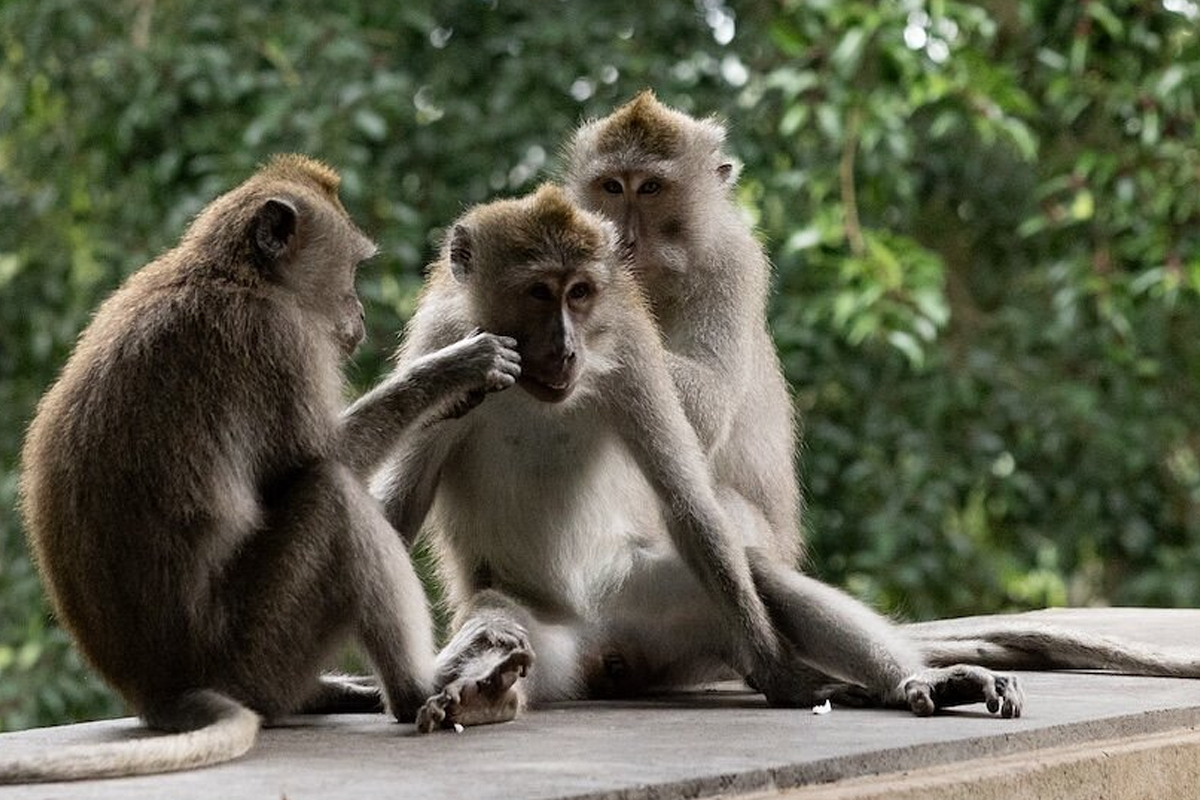
Tucked away in the village of Padangtegal, the Ubud Monkey Forest is a lush nature reserve and sacred temple complex. It’s a home to around 1,000 to 1,200 long-tailed macaques (Macaca fascicularis) and one of those rare places where wildlife, spirituality, and everyday life quietly come together.
If you’re planning to visit or just curious about this sacred spot, this guide has you covered. From entrance fees and opening hours to five surprising things you probably didn’t know about the Monkey Forest Ubud, here’s everything you need to enjoy the experience.
Monkey Forest in Ubud Entrance Fee and Opening Hours
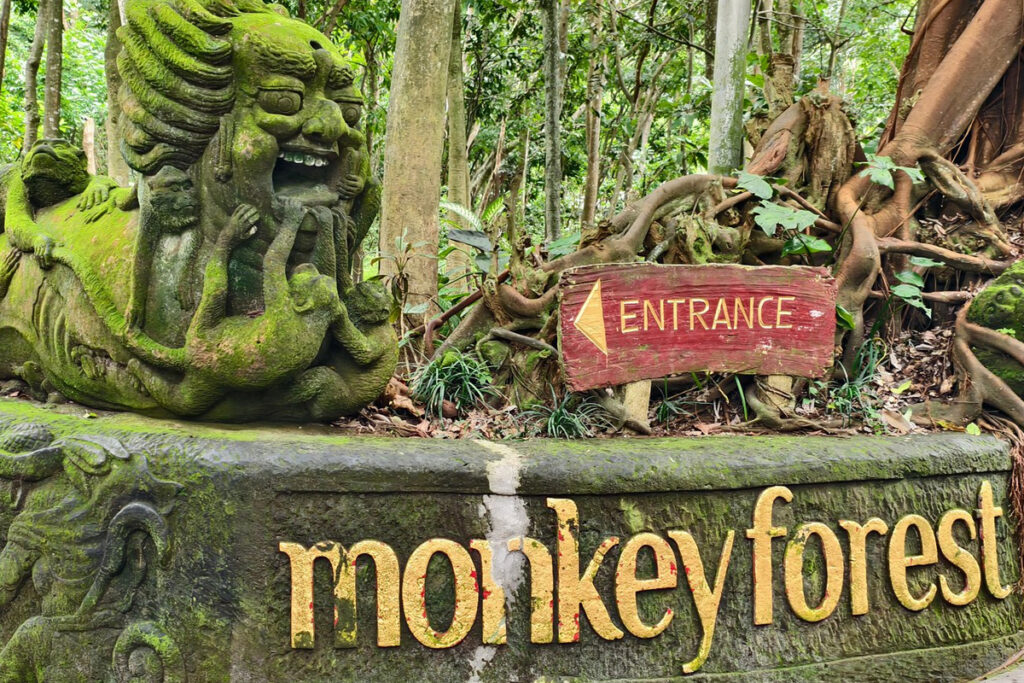
The Ubud Monkey Forest, or Mandala Suci Wenara Wana is far more than just a patch of trees, it’s a living conservation area where nature, wildlife, and spirituality exist side by side. For the local community of Padangtegal Traditional Village, the monkeys here are sacred guardians of the temples hidden within the forest.
In line with Balinese Hindu beliefs, harming them is strictly forbidden, adding a layer of deep respect to every encounter. If you’re planning a visit, here’s what you need to know about opening hours and Ubud Monkey Forest tickets.
Opening Hours
When planning your itinerary and figuring out how many days in Ubud you’ll need, make sure to visit the forest between its opening hours of 9:00 AM and 6:00 PM WITA. Arriving early is recommended so you can explore the sanctuary without the midday crowds.
Entrance Fees (2026)
Weekdays (Monday – Friday)
- International adult: IDR 100,000
- International child (3–12): IDR 80,000
- Domestic adult / KITAS holder: IDR 80,000
- Domestic child / KITAS holder: IDR 60,000
Weekends & Public Holidays
- International adult: IDR 120,000
- International child (3–12): IDR 100,000
- Domestic adult / KITAS holder: IDR 100,000
- Domestic child / KITAS holder: IDR 60,000
For something truly memorable, you can book a professional photo session where a monkey appears to be holding your camera, it’s a fun, quirky keepsake that costs around IDR 50,000 per group. If photography’s your thing, full tour packages with a guide start at about IDR 500,000.
If you’re planning to spend a few days in Ubud, you’ll find plenty to fill your time beyond the forest. People come here for many reasons, some are drawn by the wildlife, others by the peaceful atmosphere, and many simply want to experience one of the most tranquil places in Ubud.
5 Interesting Things About Monkey Forest Ubud
Here are five things that make the Ubud Monkey Forest so special, with each one adding a layer of depth to your visit beyond just a fun stop with monkeys.
1. It Dates Back to the 14th Century
This isn’t a recently built attraction. The temples inside the forest, especially Pura Dalem Agung Padangtegal, are believed to have been constructed around the mid-1300s. Long before tourists arrived, this land served as a sacred space for worshiping ancestors and deities.
The forest has been preserved all these centuries as a symbol of nature’s holiness, giving every step you take a sense of walking through living history.
2. Guided by a Ancient Philosophy Called Tri Hita Karana
What makes this place run so harmoniously? A Balinese philosophy called Tri Hita Karana, which translates to “Three Causes of Happiness.” It balances three relationships: between humans and God (through the temples), between humans and each other (through the community), and between humans and nature (through the monkeys and the forest). These principles have kept the ecosystem thriving, even as Ubud developed rapidly around it.
3. A Forest Without Borders for Thousands of Monkeys
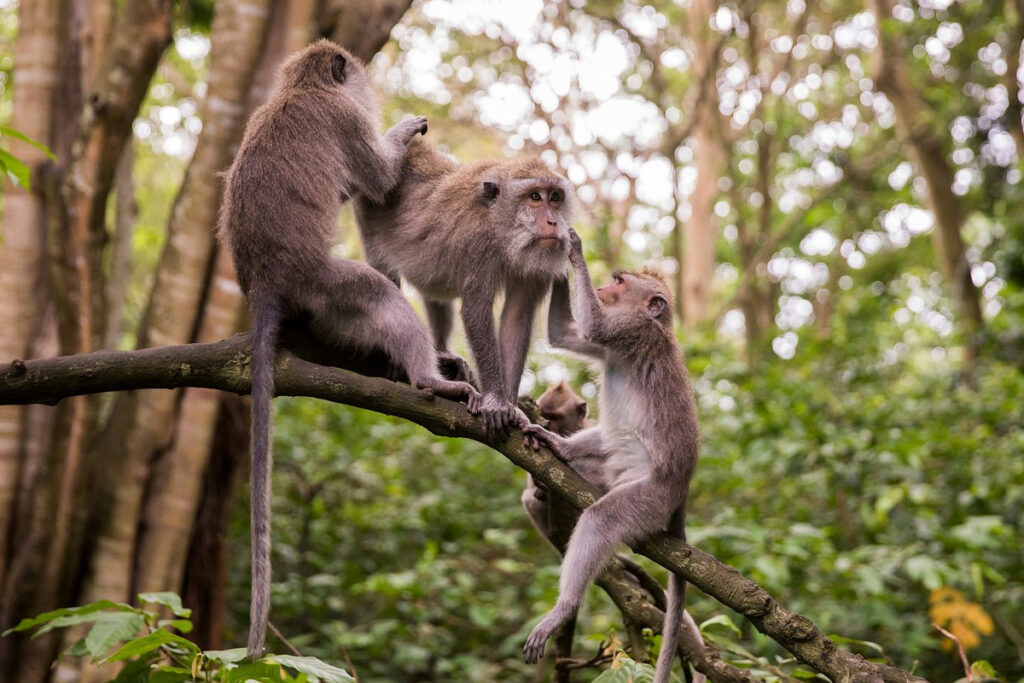
Though the forest is a protected reserve, the monkeys here live completely wild and free. They’re organized into around 10 to 12 social groups, each claiming its own turf.
Some hang around the temple entrance, others rule the riverbanks, and a few prefer the shade of ancient trees. Watching different groups interact (or clash) from a safe distance is like tuning into a wildlife documentary in real time.
4. Home to Trees Considered Sacred
Over 186 tree species grow here, but a few hold special spiritual meaning. The Pule tree, for example, provides bark used to craft sacred Barong masks for ceremonies.
Then there’s the Banyan tree, with its iconic hanging roots, not just beautiful to photograph, but believed to offer spiritual protection and even serve as a home for invisible beings, according to local beliefs.
5. A Real-Life Lab for Scientists
Believe it or not, the Ubud Monkey Forest is one of the world’s most important sites for primate research. Because the long-tailed macaques here are so used to humans, researchers from across the globe come to study their behavior, social structures, and even how they communicate. It’s a rare place where ancient tradition and modern science exist peacefully side by side.
The Guideline Visit Monkey Forest Ubud
Visiting the Ubud Monkey Forest is one of the most unique experiences you can have in Bali. It’s exciting, scenic, and a little adventurous. Since you’ll be walking among wild monkeys inside a sacred temple complex, following a few simple guidelines will help keep your visit safe and enjoyable.
Here’s a simple and practical guide to help you enjoy your visit:
1. Keep Your Belongings Secure
The monkeys are clever and naturally curious. If they see something interesting, they may try to grab it.
- Store sunglasses, phones, earrings, and small valuables inside a fully closed bag.
- Avoid carrying plastic bags, as the sound often attracts monkeys.
- Double-check your bag zippers. They can open loose compartments surprisingly fast.
2. How to Interact with the Monkeys
They may look friendly, but they are still wild animals.
- Do not feed them unless it’s food provided by park staff. Human snacks can cause health problems and aggressive behavior.
- Avoid touching or holding them, especially baby monkeys. Mothers are very protective.
- Try not to maintain long, direct eye contact. Monkeys may see it as a challenge.
- If one jumps onto you, stay calm and walk slowly away. They usually climb down on their own.
3. Respect the Sacred Area
The Monkey Forest is also an active spiritual site.
- Dress modestly by covering shoulders and knees.
- Some temple areas may require a sarong.
- Follow all posted signs, especially those marking restricted zones.
4. Health & Safety Tips
- Stay on the designated walking paths.
- Wash or sanitize your hands after your visit.
- If you are scratched or bitten, report it immediately to a ranger for assistance.
5. Best Time to Visit
Arriving when the park opens at 9:00 AM is ideal. The weather is cooler, the crowds are lighter, and the monkeys are generally calmer after their morning feeding
FAQs About Monkey Forest Ubud
1. Where is Ubud Monkey Forest located?
Ubud Monkey Forest sits in Padangtegal Village, right in the heart of Ubud, Gianyar Regency. You’ll find it at the southern end of Monkey Forest Road, making it very easy to reach if you’re staying in central Ubud. From Ngurah Rai International Airport, the drive usually takes around 1.5 to 2 hours, depending on traffic.
Many travelers often compare Sangeh Monkey Forest vs Ubud Monkey Forest, but Ubud’s location is far more convenient since it’s surrounded by cafés, shops, and attractions. After your visit, you can easily continue your day exploring town or heading to the Ubud night market.
2. How much time should you spend there?
Plan for about 1.5 to 2 hours. That gives you enough time to walk through the forest at a relaxed pace, explore the three temples, observe the monkeys, and take photos without feeling rushed. After your visit, you can continue your day enjoying good beverages at a nearby café or exploring the charm of Ubud.
3. How do you get to Ubud Monkey Forest?
There are several easy options:
- Walking: If you’re staying near Monkey Forest Road, walking is the simplest and most enjoyable way.
- Motorbike or Car Rental: A popular option in Bali. Parking at the site is spacious and well-organized.
- Online Ride Services (Grab/Gojek): Very easy to find in Ubud.
- Hotel Shuttle: Many hotels offer free shuttle services to central Ubud, including the Monkey Forest area.
After your visit, you can head to the Ubud night market for local bites or reserve a table at a fancy restaurant in Ubud to end your day beautifully.
4. What should you wear?
Since it’s a tropical forest and also a sacred temple area, comfort and modesty are important.
- Clothing: Wear light, breathable outfits. It’s best to choose clothes that cover your shoulders and knees.
- Shoes: Comfortable walking shoes or hiking sandals are ideal, especially because some areas can be slippery.
- Keep Accessories Minimal: Avoid wearing flashy jewelry, loose sunglasses, or hats. Monkeys are naturally curious and may try to grab them.
5. How long does it take to walk around?
If you walk straight through without stopping, you can complete the main trail in about 30–45 minutes. But most visitors take longer because the wooden bridges, giant tree roots, and ancient statues make the whole place feel magical.
It’s a peaceful experience that can easily fit into a romantic itinerary, and it’s surprisingly good for honeymoon couples looking for something unique beyond just beaches and resorts.
Final Thought on Monkey Forest Ubud
The monkey forest ubud is more than just a tourist attraction. It’s a rare place where nature, history, and spirituality come together in a way that feels both peaceful and alive.
After exploring Monkey Forest Ubud, take your day a little further by unwinding at Jungle Club Ubud, where lush views and relaxed vibes complete the experience. Pairing the forest adventure with a scenic lunch or sunset moment nearby makes your time in Ubud feel even more memorable.