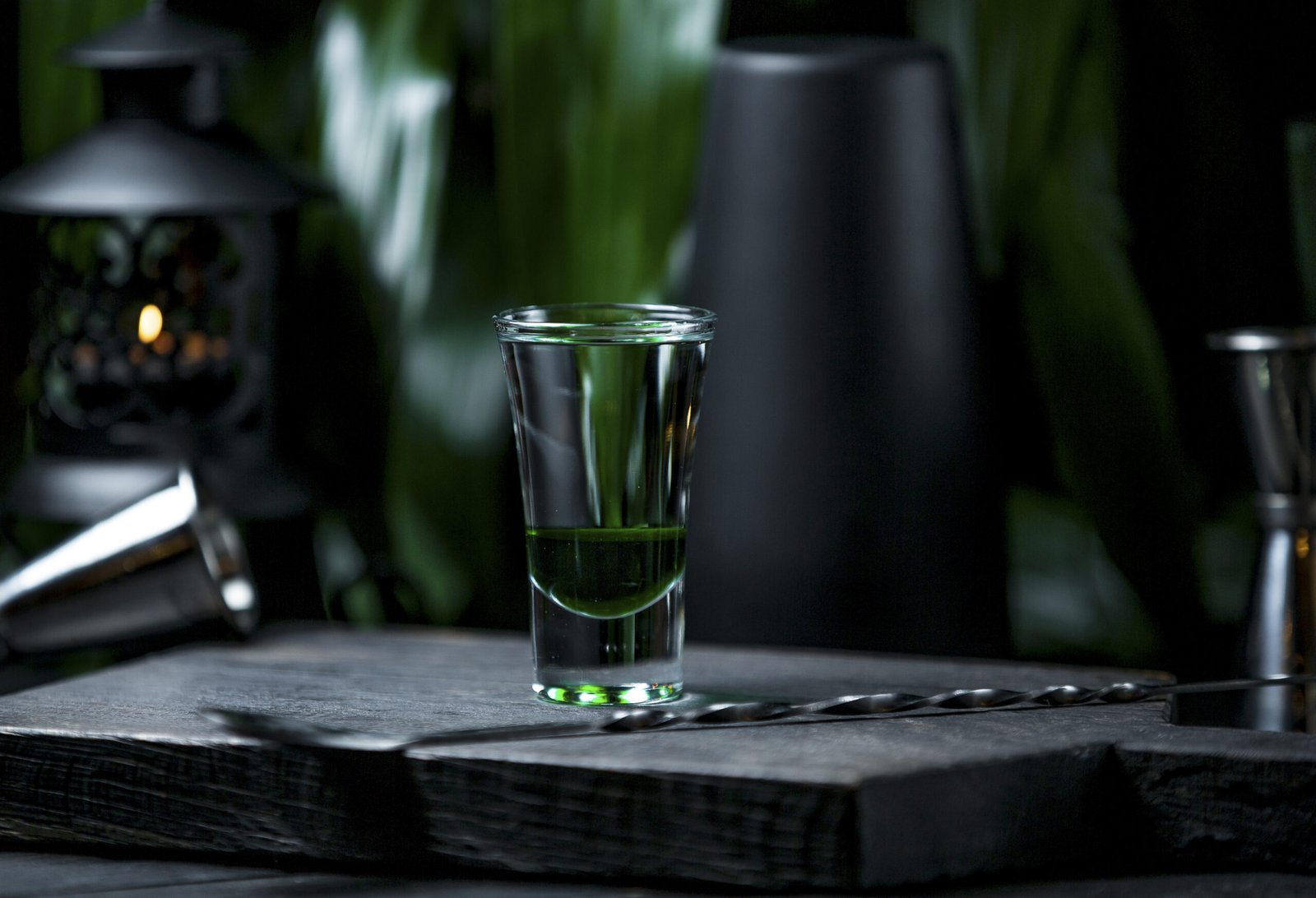
Absinthe is a highly potent spirit with a steep alcohol content (45–74% ABV) crafted from a blend of wormwood, anise, and fennel.
In fact, the drink was outlawed in many countries during the early 20th century (specifically in Switzerland in 1910, the United States in 1923, and France in 1915). The prohibition was largely driven by the widespread belief that the drink induced hallucinations and madness.
However, modern research has shown that the real culprits behind those symptoms were the dangerously high alcohol levels and toxic additives used by irresponsible manufacturers, rather than the wormwood itself.
If you want to dive deeper into its origins, are curious about what is absinthe and why was it banned, or want to learn how it eventually regained its legal status and the traditional ways to serve it, this article will cover everything you need to know.
What Is Absinthe Made From?
Absinthe famously earned the iconic nickname, the “Green Fairy.” This moniker came about because authentic absinthe is crafted entirely from natural ingredients, completely free from artificial chemical additives.
The “Green Fairy” is an anise-flavored spirit distilled using a specific botanical blend known as the “Holy Trinity” of absinthe. These three primary ingredients are:
- Wormwood (Artemisia absinthium): This herb provides the spirit’s signature bitter flavor profile and an earthy aroma.
- Anise: Delivers a touch of natural sweetness that perfectly balances the bitterness of the wormwood.
- Fennel: Enriches the overall complexity with a light, herbaceous profile.
You might be wondering: why is absinthe green, and why is its alcohol by volume (ABV) so high? The answer lies in its natural ingredients.
The signature green hue comes directly from the chlorophyll extracted when herbs like hyssop and melissa are steeped in the liquid after the initial distillation. Meanwhile, the notoriously high alcohol content isn’t actually meant to get people drunk faster.
Rather, it serves a highly practical purpose: it acts as a preservative to protect the spirit and keep its vibrant green color from fading too quickly.
Why Was Absinthe Banned?
The story began in the 18th century in the Neuchâtel region of Switzerland (around 1792). Originally, this potent spirit was intended as a medicinal herbal elixir, crafted from extracts of wormwood, anise, and fennel.
Fast forward to the following century, absinthe reached its golden age. It became the ultimate drink of choice for world-renowned creatives and writers like Vincent van Gogh, Oscar Wilde, and Ernest Hemingway.
However, soaring success didn’t sit well with everyone in the alcohol business. Its booming popularity posed a massive threat to the wine industry, which was already heavily crippled at the time by the Phylloxera pest outbreak.
The Role of Thujone and Absinthism
The smear campaign against absinthe heavily targeted one of its core components: thujone (a naturally occurring chemical in wormwood). This propaganda birthed a bogus medical condition called “Absinthism,” with baseless claims that the drink induced hallucinations and sheer madness.
In reality, the amount of natural thujone is incredibly minuscule. In other words, the idea that thujone could make someone hallucinate or drive them insane was a completely misleading myth.
The actual cases of alcohol poisoning during golden age were simply the result of people binge-drinking massive quantities of high-proof alcohol, not the thujone itself.
Countries That Banned Absinthe
Under the immense pressure of the wine industry’s smear campaign, which successfully turned public opinion against absinthe, numerous countries began to outlaw the production and distribution of the spirit.
|
Country |
Year of the Ban |
Context |
|
Belgium |
1905 |
The first country to ban it due to mass hysteria. |
|
Switzerland |
1910 |
The ban was incorporated directly into the Swiss Constitution. |
|
Netherlands |
1910 |
Followed Switzerland’s lead amid growing anti-absinthe sentiment across Europe. |
|
United States |
1912 |
Banned by the US Department of Agriculture (USDA). |
|
France |
1914 |
Restricted in 1914 and outright banned in 1915 to “preserve troop morale” during World War I. |
|
Italy |
1932 |
Banned under Mussolini’s regime to crack down on extremely high-proof spirits. |
Is Absinthe Legal Today?
After being outlawed in several countries, is absinthe legal today? The answer is a resounding yes.
The comeback began in the mid-2000s when the majority of nations started lifting their bans to legalize the spirit. This major turning point was driven by factual, modern research which finally proved that is absolutely no more dangerous than other types of alcohol.
In fact, 19 years ago, the United States officially lifted its long-standing ban on absinthe. However, this repeal was accompanied by strict regulations regarding its naturally occurring chemical, thujone.
The US set a firm threshold, mandating that the thujone content in absinthe must remain under 10 ppm (parts per million). Meanwhile, the European Union is a bit more lenient, permitting the spirit to contain up to 35 ppm of thujone.
How Absinthe Is Traditionally Served
To enjoy, you can prepare it using a time-honored ritual that has been practiced for over a century. Here are the steps to traditionally serve absinthe:
- Pour about 1 to 1.5 oz into a specialized absinthe glass.
- Rest a slotted spoon across the rim of the glass.
- Place a single sugar cube on top of the spoon.
- Slowly drip ice-cold water over the sugar cube until it dissolves completely and drips into the absinthe below. The ideal ratio is typically 1 part absinthe to 3 to 5 parts water.
The “Louche” Effect
As the ice-cold water mingles with the absinthe, the essential oils from the anise and fennel drop out of solution, as they cannot dissolve in water.
This creates a mesmerizing visual reaction: the once-clear green spirit gracefully transforms into a cloudy, opalescent, and milky-white liquid.
This captivating phenomenon is known as the “louche” (pronounced loosh), a process that unlocks and releases the spirit’s deeply hidden herbal aromas.
Absinthe and Other Classic Spirits at The Jungle Club Ubud
Today, absinthe is legally available in many countries, albeit under strict regulations. This widespread legalization finally shatters the centuries-old stigma that painted the spirit as a catalyst for hallucinations and madness.
The historical prohibition of the Green Fairy was ultimately driven by mass hysteria and a ruthless smear campaign from competing industries, not because it actually caused hallucinations. With the truth finally out, modern liquor enthusiasts can now safely enjoy this timeless classic.
Ready to experience the unique herbal flavor profile of absinthe for yourself, or perhaps explore other classic cocktails and premium spirit alternatives? Discover an exceptional selection of the finest drinks on the menu at The Jungle Club Ubud, and dive deeper into our guide on alcohol types and their alcohol by volume (ABV) to ensure you order the absolute perfect pour.
FAQs
- Is absinthe legal in the United States?
Yes, has been perfectly legal in the United States since 2007. Regulations set by the TTB (Alcohol and Tobacco Tax and Trade Bureau) permit its sale as long as the product is classified as “thujone-free,” meaning its naturally occurring thujone content cannot exceed a strict limit of 10 ppm (parts per million).
- Does absinthe really cause hallucinations?
No, absolutely does not cause hallucinations. That is nothing more than a 19th-century myth born out of a ruthless smear campaign orchestrated by the competing wine industry.
The nerve damage suffered by heavy drinkers in the past was purely the result of extreme alcohol poisoning from consuming massive quantities of high-proof liquor, not the effects of thujone.
- What does absinthe taste like?
The primary flavor profile is heavily dominated by bold notes of licorice and anise. This prominent sweetness is beautifully balanced by complex layers of earthy herbs, delicate floral touches, and a signature bitter finish courtesy of the wormwood extract.
- What is the correct way to drink absinthe?
The proper way to serve it is by using the traditional “French Method” (the ice-water drip), never by setting it on fire. Slowly drip ice-cold water over a sugar cube resting on a slotted absinthe spoon.
The chilled water gently dilutes the spirit, dissolves the sugar, and triggers the mesmerizing louche effect (turning the liquid a milky, cloudy white), which ultimately unlocks and releases the spirit’s true botanical aromas.